

Clients often ask me whether the IRS takes steps to slant the facts and law in the governments favor. I often explain that, as with most legal matters, there is really no right or wrong answer until the court makes a final determination and all appeals are exhausted. But when I say this I often… Continue reading IRS Rejects Court Orders, Law and Logic: Modus Operandi or Isolated Case?
Tax Articles
Supreme Court Questions U.S. Tax Court’s Rule Violations
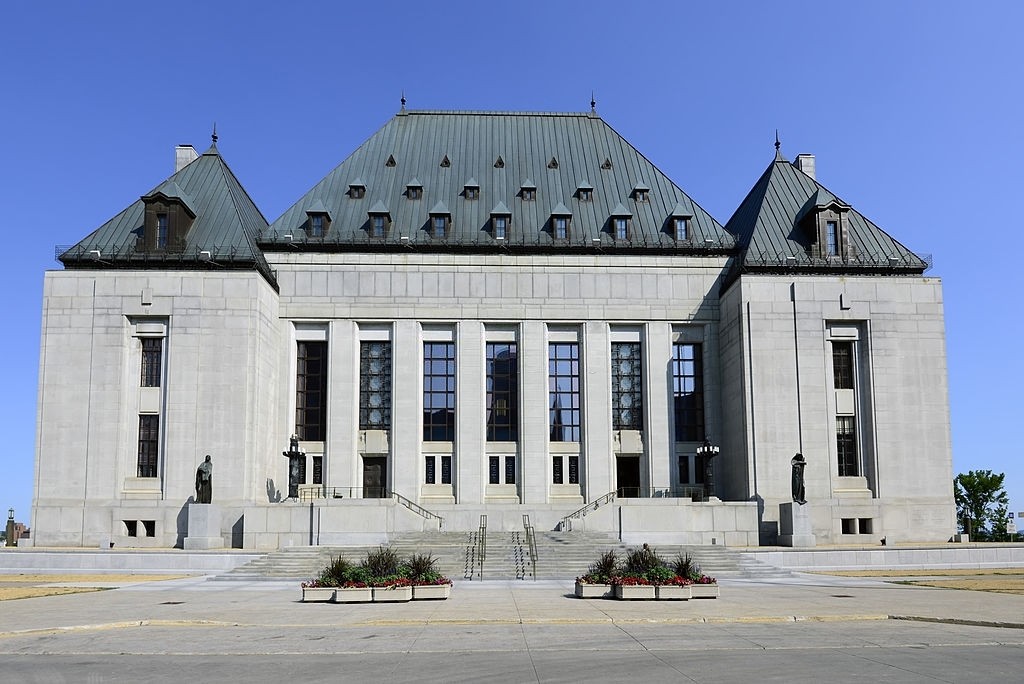
The U.S. Tax Court provides a forum for contesting tax assessments and for certain collection matters. It is the only forum that allows taxpayers to maintain litigation without first paying the tax, etc. that is in dispute. For many taxpayers, it is the only forum that is available. This is why it is important for… Continue reading Supreme Court Questions U.S. Tax Court’s Rule Violations
Taxation of Settlement Agreements for Plaintiffs Attorneys

Settlement awards can be structured in a number of different ways. This presents a number of tax planning opportunities. But for the typical settlement award, the tax consequences are somewhat standard. Including the Settlement in Income One of the tax issues for settlement awards is whether the award can be excluded from the clients income. … Continue reading Taxation of Settlement Agreements for Plaintiffs Attorneys
The IRS Should Not be able to Solicit Criminal Information from Non-Lawyer Tax Practitioners

Civil tax cases often turn into criminal tax cases. In those instances the IRS initially investigates the tax crime and then refers the case to the Department of Justice. The IRS efforts to investigate the potential tax crime often require that they obtain information from third parties, such as the taxpayer’s employer, neighbors, and financial… Continue reading The IRS Should Not be able to Solicit Criminal Information from Non-Lawyer Tax Practitioners
Estate & Trust Attorneys Will Increasingly be Subject to Malpractice Actions Brought by Beneficiaries

It is now well established that a plaintiff s attorney should be subject to malpractice liability for not proposing a structured settlement annuity versus a lump sum payment to their injured clients and for not seeking the advice and assistance of a competent financial adviser in the process. The principles underlying this type of malpractice… Continue reading Estate & Trust Attorneys Will Increasingly be Subject to Malpractice Actions Brought by Beneficiaries
Better than a Soap Opera? Trust Fund Tax Disputes

Businesses often succumb to the temptation to use taxes withheld from employees wages to manage cash flow problems. These “government loans” can prove to be quite costly. Hart v. Commissioner, 19120-12 provides an example. Facts & Procedural History The taxpayer worked for a real estate firm. The firm did not pay its payroll taxes. The… Continue reading Better than a Soap Opera? Trust Fund Tax Disputes
Taxpayer: It’s All About Valuation; IRS: We’re Damned if We Do

Many tax practitioners agree that valuing property for tax purposes is the most important issue that they face. Yet valuation issues are often murky and amorphous. In most cases valuation disputes are resolved in favor of the party that has the most convincing valuation expert. In other cases valuation disputes are resolved on even less… Continue reading Taxpayer: It’s All About Valuation; IRS: We’re Damned if We Do
Evidence That Can be Considered When Applying the Federal Sentencing Guidelines

The federal criminal sentecing guidelines use a point system. Points or levels are assigned to characteristics of individual crimes and individual criminal offenders. The higher the points or levels the higher the sentence imposed. The system is intended to produce uniform and rational criminal sentences. This policy could be undermined by a limitation in the… Continue reading Evidence That Can be Considered When Applying the Federal Sentencing Guidelines
Congress Proposes Changes to the IRS Offer in Compromise Program

The Offer in Compromise (OIC) has proven to be an invaluable tool for taxpayers to resolve tax disputes with the IRS. OICs have allowed taxpayers to come into compliance with our tax laws and they have also allowed the government to collect tax liabilities that would otherwise go uncollected. Yet, Congress has taken a notion… Continue reading Congress Proposes Changes to the IRS Offer in Compromise Program
Lessons Learned from Colorado’s Taxpayer Bill of Rights

Taxpayers’ Bills of Rights (TABORs) prevent state governments from increasing taxes or spending revenue growth without first obtaining voter approval. Several states are poised to adopt state TABORs in the near future. The State of Colorado adopted a TABOR in 1992. There are a number of lessons that other states can learn from Colorado’s TABOR… Continue reading Lessons Learned from Colorado’s Taxpayer Bill of Rights